
Patio vs Decking: What Works Best in Small Gardens?
Small gardens present a unique design challenge. Every metre matters, and the choice of surface material can completely change how the space feels and functions. Among the most popular options in Camberwell are patios and decking, both offering distinct advantages and drawbacks.
Choosing between patio and decking is not simply about appearance. It involves considerations such as maintenance, longevity, budget, usability, safety, and how spacious your garden feels once completed.
In this guide, we explore patio vs decking in depth, helping you make an informed decision tailored to your space, lifestyle, and long-term expectations.
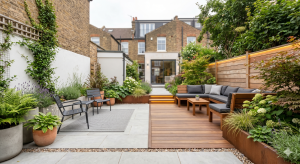
Understanding Patio and Decking
Before comparing them, it is important to understand what each option involves.
What is a Patio?
A patio is a paved outdoor surface typically constructed using materials such as:
- Natural stone (sandstone, limestone, slate)
- Concrete slabs
- Porcelain tiles
- Brick or block paving
Patios are usually laid directly onto a prepared base and sit flush with the garden ground.
What is Decking?
Decking is a raised or ground-level platform made from:
- Softwood timber
- Hardwood timber
- Composite boards (wood-plastic mix)
Decking is built using a subframe structure, which can make it suitable for uneven ground or sloped gardens.
Space Perception in Small Gardens
One of the most important considerations in small garden design is how large the space feels once completed.
Patio in Small Gardens
Patios can make small gardens feel more open and structured when designed correctly. Key benefits include:
- Large-format slabs reduce visual clutter
- Light-coloured paving reflects more light
- Straight lines create a clean, spacious look
- Seamless ground-level finish enhances openness
However, dark or heavily patterned paving can sometimes make the space feel more compact.
Decking in Small Gardens
Decking introduces elevation and texture, which can be visually appealing but affects spatial perception:
- Creates distinct zones within a small area
- Adds depth through raised levels
- Can define seating or dining areas clearly
- Dark stains may visually reduce space if overused
Conclusion: For purely visual spaciousness, patios usually perform better. For creating multi-level interest, decking is stronger.
Cost Comparison: Installation and Long-Term Value
Budget plays a major role in decision-making.
Patio Costs
Patio pricing depends heavily on material choice:
- Concrete slabs: most affordable
- Natural stone: mid to high cost
- Porcelain: higher upfront cost but premium finish
Additional costs include groundwork, drainage, and labour. However, patios typically offer strong long-term value due to their durability.
Decking Costs
Decking costs vary depending on material:
- Softwood decking: lower initial cost
- Hardwood decking: more expensive but longer-lasting
- Composite decking: highest upfront cost, low maintenance
While timber decking may be cheaper initially, maintenance and replacement costs can increase over time.
Maintenance Requirements
Maintenance is a crucial factor in long-term satisfaction.
Patio Maintenance
Patios are generally low maintenance:
- Occasional pressure washing
- Weed control between joints
- Repointing over time (depending on materials)
Porcelain patios are particularly low maintenance due to their non-porous surface.
Decking Maintenance
Decking requires more regular care:
- Timber needs staining or sealing every 1–3 years
- Regular cleaning to prevent algae build-up
- Boards may need replacement over time
Composite decking reduces maintenance significantly but still requires cleaning.
Durability and Weather Resistance
The UK climate is a key factor in outdoor material performance.
Patio Durability
Patios are highly durable:
- Resistant to heavy rain and frost
- Long lifespan (often decades)
- Minimal structural movement
- Low risk of rot or insect damage
Decking Durability
Decking durability depends on material:
- Timber can warp, rot, or split if not maintained
- Composite is more stable and weather-resistant
- Can become slippery in wet conditions if not treated
Safety Considerations
Safety is particularly important in small gardens where space is limited.
Patio Safety
- Stable, solid surface
- Can become slippery if algae builds up
- Flat design reduces trip hazards
Decking Safety
- Can become slippery when wet (especially timber)
- Requires anti-slip treatments or grooved boards
- Elevated sections may require railings
Design Flexibility
Both materials offer strong design potential but in different ways.
Patio Design Ideas
Patios suit structured, modern layouts:
- Minimalist geometric designs
- Mixed paving patterns for contrast
- Integrated planters and seating areas
- Outdoor dining zones
Decking Design Ideas
Decking allows for more architectural creativity:
- Split-level gardens
- Built-in benches and storage
- Integrated lighting systems
- Raised lounge areas
Suitability for Uneven or Sloped Gardens
This is an area where decking often has an advantage.
Patio Limitations
- Requires extensive groundwork on slopes
- May need retaining walls
- Higher preparation cost on uneven terrain
Decking Advantages
- Easily built on slopes or uneven ground
- Minimal excavation required
- Can create multi-level platforms
Environmental Considerations
Patio
- Stone and concrete have higher embodied carbon
- Very long lifespan reduces replacement frequency
- Natural stone can be more sustainable if ethically sourced
Decking
- Timber can be sustainable if FSC-certified
- Composite uses recycled materials in many cases
- Requires replacement sooner if poorly maintained
Pros and Cons Summary
Patio Advantages
- Extremely durable and long-lasting
- Low maintenance requirements
- Creates a clean, spacious look
- Wide range of design options
Patio Disadvantages
- Higher installation cost for premium materials
- Can feel hard and cold underfoot
Decking Advantages
- Warm and natural appearance
- Excellent for uneven gardens
- Flexible design and zoning options
Decking Disadvantages
- Higher maintenance for timber
- Can become slippery if not treated
- Shorter lifespan compared to stone patios
Which Works Best in Small Gardens?
There is no universal answer, but clear trends emerge:
- Choose patio if you want: durability, low maintenance, and a visually open garden
- Choose decking if you want: warmth, elevation, and flexible zoning
In many cases, combining both delivers the best result. For example:
- Patio for dining and dining furniture stability
- Decking for relaxed seating or sunken lounge areas
- Mixed materials to define separate zones in a compact space
Expert Design Tips for Small Gardens
To maximise your space regardless of material:
- Use light colours to reflect natural light
- Avoid cluttering with too many materials
- Keep furniture proportional to the space
- Use vertical planting to free ground area
- Integrate built-in seating to reduce bulk
Essential Gardening Tips and Practical Maintenance Guides
- Modern Gardening Trends 2026: A Complete Urban Gardening Guide
- Why Regular Garden Maintenance Saves You Money Long-Term
- Wildlife-Friendly Garden Design for Urban Homes
- Patio vs Decking: What Works Best in Small Gardens?
- Seasonal Garden Maintenance Checklist for Camberwell Homes
- Is Pressure Washing Safe for All Patio Types?
- Low-Maintenance Garden Ideas Perfect for Camberwell Homes
- Garden Clearance in Camberwell: Costs, Timeline & What’s Included (2026 Guide)