
Is Pressure Washing Safe for All Patio Types?
Pressure washing is one of the most effective ways to restore a patio, but it is also one of the most commonly misused garden maintenance methods.
Used correctly, it can transform outdoor surfaces in minutes. Used incorrectly, it can permanently damage the surface, loosen jointing, or even shorten the lifespan of your patio.
As professional gardeners working across Camberwell, we regularly see the difference between a well-cleaned patio and one that has been over-pressurised. The key issue is not whether pressure washing works, but whether it is suitable for the specific material.
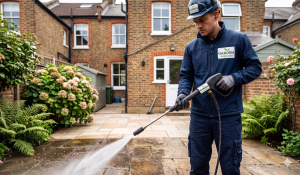
Understanding What Pressure Washing Actually Does to a Patio
Before looking at individual materials, it helps to understand what is happening during pressure washing.
A pressure washer uses high-speed water to:
- Break down algae and moss growth
- Dislodge dirt trapped in surface pores
- Flush debris from joints and gaps
- Strip away surface contamination
This is effective because of force, not chemicals. But that same force can also:
- Wear down softer stone surfaces
- Strip jointing sand or mortar between slabs
- Open micro-cracks in aged materials
- Expose aggregate beneath the surface layer
The key issue is that patios are not uniform. Some are dense and engineered for durability, while others are naturally porous or softer in structure.
The Most Important Factor: Patio Condition Matters More Than Material Alone
Two patios made from the same material can respond very differently to pressure washing. A well-installed, relatively new patio will generally tolerate cleaning well. However, an older surface may already have:
- Natural wear from weather exposure
- Weak or missing jointing material
- Surface erosion from previous cleaning
- Subtle movement between slabs
This means the same pressure setting that is safe on one patio can damage another.
A professional approach always begins with assessment, not equipment selection.
Concrete Patios: Strong, But Not Indestructible
Concrete is often assumed to be completely safe for pressure washing, and in most cases it performs well. Why it usually responds well:
- Dense and engineered material
- Resistant to moderate water pressure
- Less porous than natural stone
However, issues can still occur.
Where problems arise:
- Older concrete can become brittle over time
- High-pressure jets can etch the surface
- Decorative finishes may be stripped away
- Jointing sand between slabs can be removed
Concrete should be cleaned with a fan spray rather than a concentrated jet. The goal is to lift dirt, not carve into the surface.
Professional insight: Many dull or patchy concrete patios we see are not “dirty” but permanently etched from over-aggressive cleaning.
Natural Stone Patios: Where Most Damage Happens
Natural stone includes materials such as sandstone, limestone, and slate. These are widely used in UK gardens because of their natural appearance, but they vary significantly in durability.
Sandstone
Sandstone is relatively soft and porous. This makes it prone to:
- Surface erosion under high pressure
- Loss of natural texture
- Uneven colouring after cleaning
Once sandstone is worn, it rarely returns to its original finish.
Limestone
Limestone is even more sensitive.
- Easily marked or etched
- Can develop dull patches
- Surface layers may break down over time
Slate
Slate is harder but behaves differently.
- Can split along natural layers if pressured incorrectly
- Edges may chip under direct jetting
Natural stone should be treated gently. In many cases, soft washing or low-pressure cleaning with controlled technique is far safer than standard jet washing.
Professional insight: The biggest issue with natural stone is not cleaning it, but restoring it once it has been damaged.
Porcelain Paving: One of the Safest Modern Options
Porcelain has become increasingly popular in modern garden design due to its durability and low porosity.
Why it performs well:
- Extremely dense surface structure
- Resistant to staining and algae penetration
- Does not absorb water or dirt easily
However, it is not completely risk-free.
Potential issues:
- Damage to grout lines if pressure is too focused
- Poor installation can allow water ingress at edges
- Excessive pressure can loosen surrounding joints
Porcelain should be cleaned using moderate pressure and a wide spray angle. The surface itself is strong, but the system holding it in place is what requires care.
Block Paving: Durable but Joint-Sensitive
Block paving is very common in UK driveways and patios, and it is generally suitable for pressure washing.
The main risk is not the blocks themselves, but what sits between them.
What can go wrong:
- Loss of kiln-dried sand between joints
- Weed growth returning after cleaning
- Long-term movement of blocks if joints are weakened
After cleaning, re-sanding is essential. Without it, the structural integrity of the surface gradually reduces.
Professional insight: Block paving issues often appear weeks after cleaning, not immediately.
Resin-Bound Surfaces: Looks Strong, But Requires Care
Resin-bound patios are smooth, modern, and attractive, but they are more sensitive than many homeowners expect.
Risks include:
- Surface loosening under high pressure
- Displacement of embedded stone aggregate
- Loss of smooth finish texture
Low-pressure rinsing is usually sufficient. Heavy jetting should be avoided entirely.
Professional insight: Resin surfaces are more about chemical bonding than mechanical strength, which is why pressure matters so much.
Why Technique Matters More Than Equipment
One of the most common misconceptions is that a “better machine” guarantees a safer clean. In reality, technique is far more important. Key factors that determine safety:
- Distance from the surface
- Angle of the spray
- Type of nozzle used
- Consistency of movement
- Awareness of joints and edges
Even a domestic pressure washer can damage a patio if used incorrectly, while a commercial machine can be safe in skilled hands.
Warning Signs That Pressure Washing Is Not Appropriate
Before cleaning, it is important to assess whether pressure washing is suitable at all. Avoid or reconsider if:
- The surface is already flaking or powdery
- Slabs move when walked on
- Jointing material is missing or weak
- Natural stone shows visible surface breakdown
- Previous cleaning has caused patchiness or marking
In these cases, soft washing or manual cleaning is often safer and more effective.
Soft Washing: The Safer Alternative in Many Cases
Soft washing uses low-pressure water combined with cleaning solutions to remove organic growth.
Advantages:
- Reduced risk of surface damage
- More effective on algae and moss roots
- Safer for natural stone and older patios
- Longer-lasting results in many cases
This method is particularly useful in shaded gardens where algae regrowth is common.
Professional Perspective: What We See Most Often in Camberwell and Across London
In practice, most patio damage does not come from dirt or weather. It comes from:
- Overuse of high-pressure settings
- Lack of understanding of material differences
- Failure to re-sand or finish after cleaning
- Treating all patios as if they are concrete
The difference between a well-maintained patio and a damaged one is rarely effort. It is method.
Final Verdict: Is Pressure Washing Safe for All Patio Types?
Pressure washing is not universally safe. It is highly effective when matched correctly to the surface, but risky when applied without consideration of material, age, and condition.
A simple rule applies:
- Hard, dense materials (like concrete and porcelain) generally tolerate it well
- Natural stone and older surfaces require caution or alternative methods
- Jointing and installation quality are just as important as the slab itself
A patio should be cleaned to restore its appearance and function, not to compromise its structure. The safest results always come from understanding what you are cleaning before deciding how to clean it.
Essential Gardening Tips and Practical Maintenance Guides
- Modern Gardening Trends 2026: A Complete Urban Gardening Guide
- Why Regular Garden Maintenance Saves You Money Long-Term
- Wildlife-Friendly Garden Design for Urban Homes
- Patio vs Decking: What Works Best in Small Gardens?
- Seasonal Garden Maintenance Checklist for Camberwell Homes
- Is Pressure Washing Safe for All Patio Types?
- Low-Maintenance Garden Ideas Perfect for Camberwell Homes
- Garden Clearance in Camberwell: Costs, Timeline & What’s Included (2026 Guide)